Asbestos in Old Flooring: What Utah Homeowners Should Know Before a Tear-Out
If you’re planning a flooring tear-out in Utah, especially in an older home, there’s one hidden risk that can completely change how a demo should be handled: asbestos.
Many homes in Salt Lake County, Utah County, and surrounding areas were built or remodeled before asbestos was phased out of flooring products. That means materials beneath your current floors—often unseen—may contain asbestos and need to be handled carefully.
A Real Flooring Tear-Out in Utah That Had to Stop
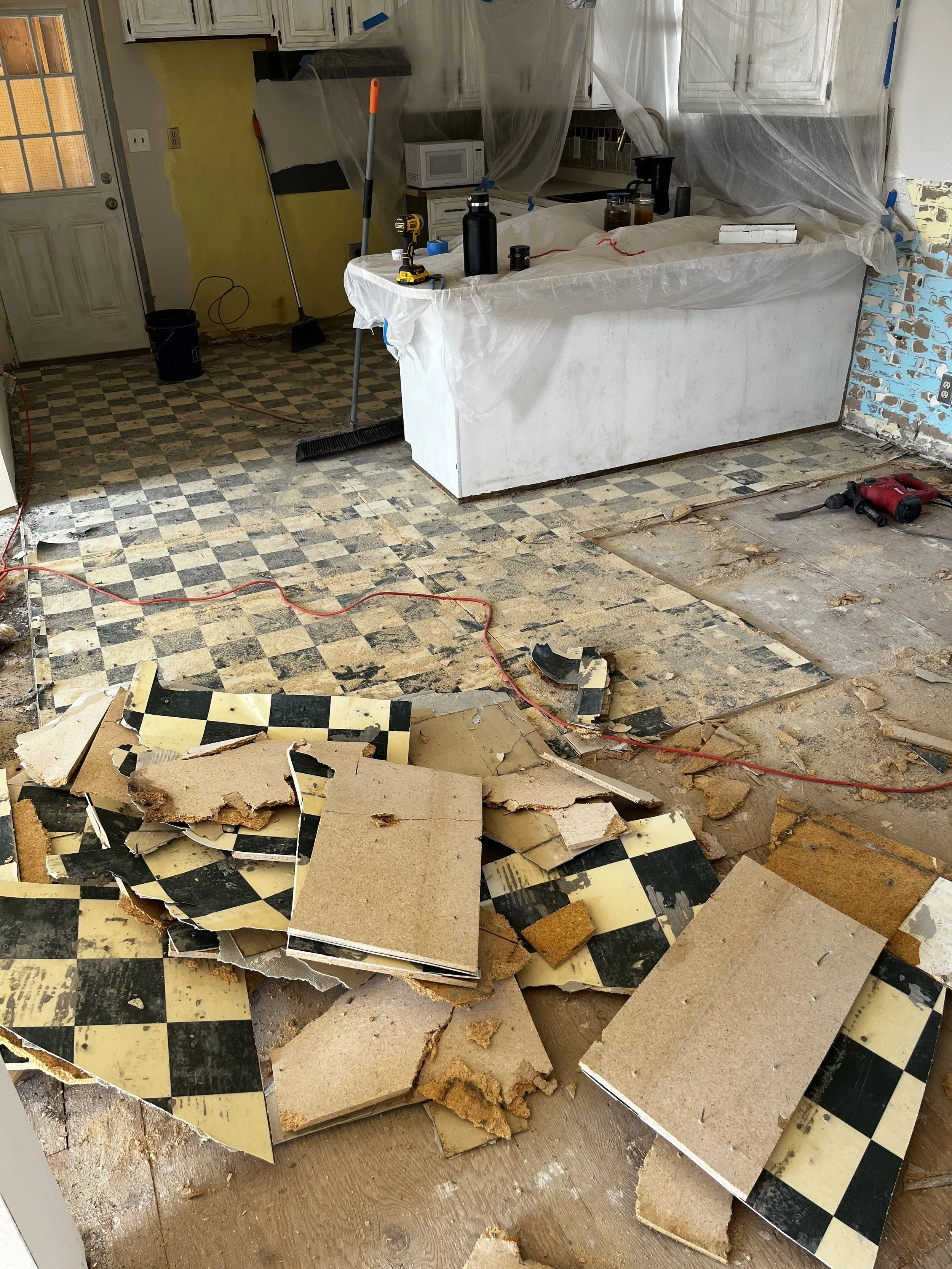
During a recent flooring demo here in Utah, we began removing tile as planned. Once the tile was up, we uncovered multiple layers of old linoleum underneath—a common scenario in homes that have gone through decades of updates.
At that point, we halted the tear-out immediately.
Layered flooring systems like this are one of the most common places asbestos can appear, especially in:
Old linoleum and vinyl flooring
Paper or felt backing
Adhesives used decades ago
Stopping wasn’t optional—it was the responsible move.
You Can’t Identify Asbestos by Looking at It
Here’s something most homeowners don’t realize:
Even the asbestos testing company, based on visual inspection alone, believed the material would likely test positive.
But looks don’t tell the full story.
After laboratory testing, the flooring materials came back negative for asbestos. Once we had documented results confirming it was safe, we were able to resume the tear-out and continue the project as normal.
Why Guessing Is the Wrong Move
This situation highlights an important truth for anyone doing a flooring remodel in Utah:
Asbestos cannot be identified visually
Color, age, texture, or smell are not reliable indicators
Even experienced professionals can be wrong without lab testing
There are only two safe options:
Test the material
Don’t disturb it
Guessing can either:
Shut down a project unnecessarily, or
Expose homeowners and workers to serious health risks
Flooring Materials in Utah Homes That Often Raise Red Flags
During flooring demos, we’re especially cautious when we encounter:
Old linoleum or sheet vinyl
Black cutback adhesive (mastic)
Paper-backed flooring layers
Multiple generations of flooring stacked together
Homes built or renovated before the mid-1980s
These materials don’t automatically mean asbestos is present—but they do mean testing should happen before demolition continues.
Why Asbestos Testing Matters in Flooring Remodels
Asbestos isn’t usually dangerous when it’s intact and undisturbed. The risk comes when it’s:
Torn out
Cut
Ground
Sanded
That’s why flooring tear-outs are one of the most common ways asbestos becomes airborne.
Our process on Utah flooring projects is simple:
Stop work if suspicious materials are uncovered
Arrange professional asbestos testing
Resume demo only after results confirm it’s safe
In this case, testing allowed the project to move forward without unnecessary delays or risk.
The Bottom Line for Utah Homeowners
If you’re planning a flooring remodel or tear-out in Utah, especially in an older home, don’t rely on appearances.
Some materials that look like asbestos aren’t.
Some materials that don’t look suspicious can be.
Testing is the only way to know for sure.
When unexpected layers show up during demo, the smartest move is to pause, test, and proceed with confidence—rather than risking health, liability, or costly mistakes.
When it comes to asbestos in flooring: test first, tear out second.