
Can You Refinish Engineered Hardwood? The Honest Answer
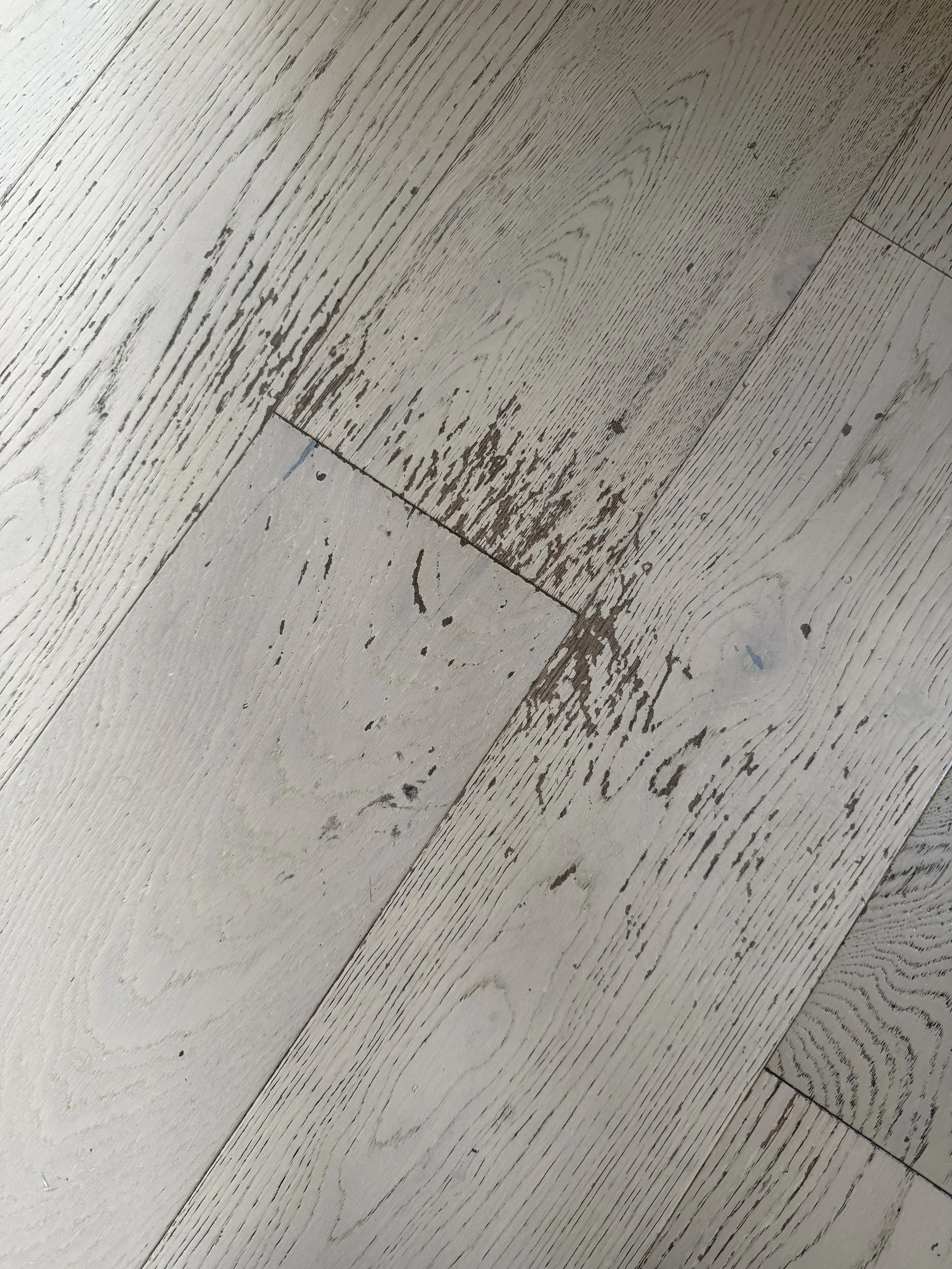
We get this question all the time, and the truth is: sometimes—but not always.
Whether engineered hardwood can be refinished comes down to one thing: the thickness of the wear layer (the real wood on top). Many engineered floors have wear layers that are simply too thin to sand safely.
A Real Example We See Too Often
We recently inspected an engineered hardwood floor that was less than five years old and already showing heavy wear in traffic areas. The homeowner assumed refinishing would solve the problem.
Unfortunately, the wear layer was too thin to refinish. Sanding it would have gone straight through the wood veneer.
That left the homeowner with two tough options:
• Live with visible wear and damage
• Or tear the floor out and replace it
To make matters worse, the floor was fully glued down, which significantly increases removal costs and labor. What was sold as a “long-term floor” became an expensive lesson far sooner than expected.
Why This Happens
Many modern engineered floors:
• Have wear layers under 2mm
• Are marketed as “refinishable” without explaining limits
• Look great at install—but don’t age well
• Offer little margin for repair once wear shows
Once that thin wear layer is gone, there’s no fixing it.
What Homeowners Should Know
Some engineered floors can be refinished—but only after:
• Measuring the wear layer
• Inspecting edges and bevels
• Evaluating prior coatings and wear
• Choosing the right refinishing or oil system
Guessing is how floors get ruined.
The Bottom Line
Not all hardwood floors are created equal. And not every problem can be sanded away—especially with engineered products.
If you’re in Utah and unsure whether your engineered hardwood can be refinished, refreshed, or needs replacement, the first step is an honest inspection, not a sales pitch.